Labor Union in the 20th Century
Origin of International Workers’ Day
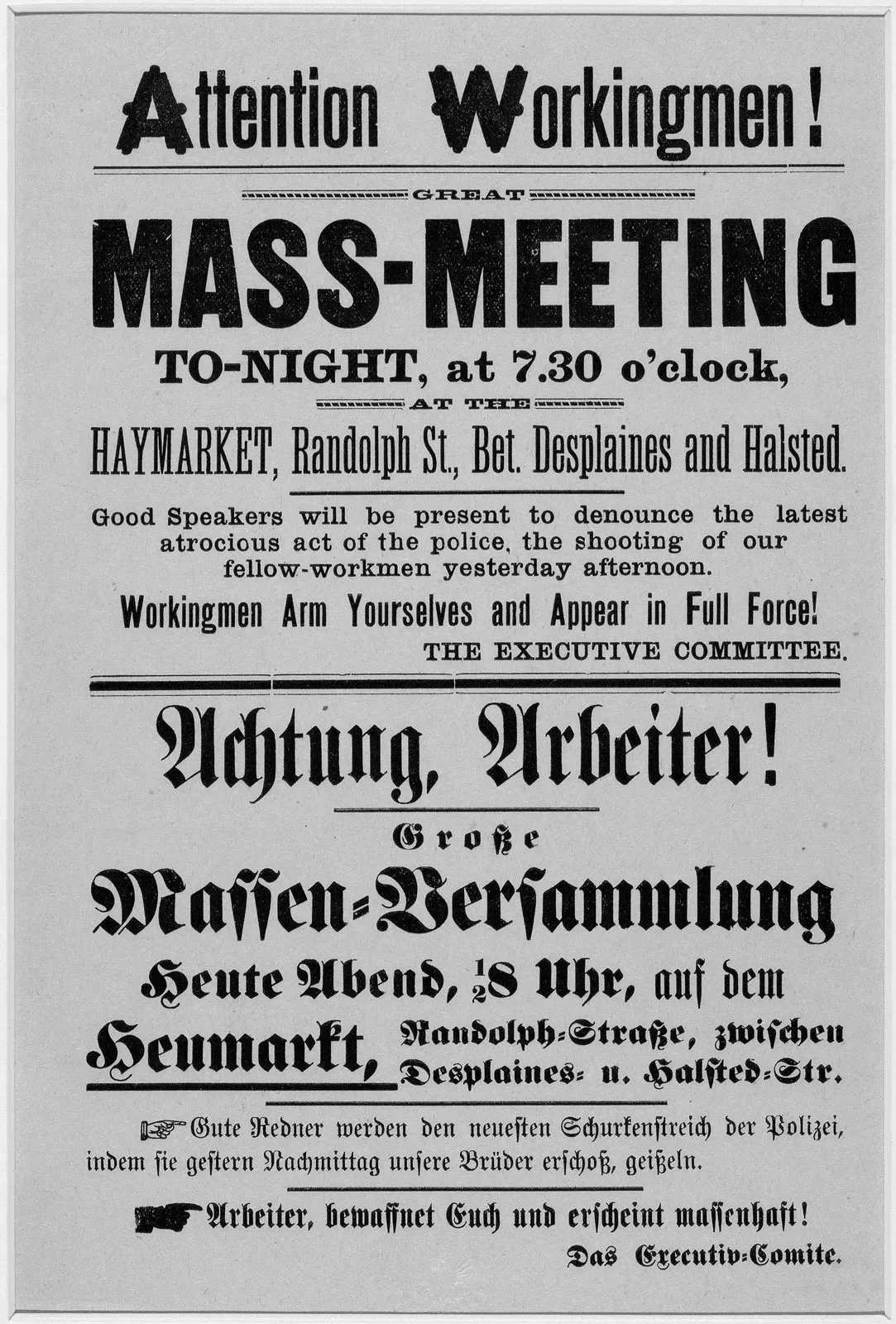
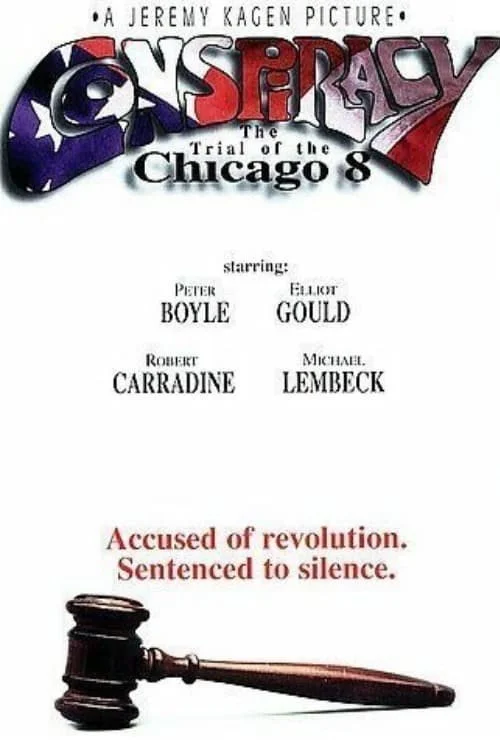
Although International Workers’ Day gained global popularity in the 20th century, its origin dates back to the end of the 19th century, in commemoration of the Haymarket Affair, a violent confrontation between workers and police in Chicago that occurred on May 4, 1886. One day before the Haymarket Affair, on May 3, a union rally for an eight-hour workday took place at the McCormick Harvesting Machine Company, during which one protestor was killed and several were injured by police who intervened to protect strikebreakers. On May 4, a rally in support of the workers injured and killed by police brutality took place at Haymarket Square. The event began peacefully, but at the end of the rally, an unknown person threw a dynamite bomb into the police, killing seven officers. At least four civilians were killed and thirty were injured as a result of police gunfire. Eight union leaders were charged with the bombing, seven of them being sentenced to death, without any solid evidence that they had assisted the bombing. The trial created a backlash against the union leaders, helping employers win the power over workers in the following years. Seven years later, in 1893, petitions were made to the governor to admit that the unjust trial consisted of biased judges, a deliberately chosen jury, and fabricated evidence. Pardon was finally issued to the “Chicago Eight” after four were hanged and one committed suicide.
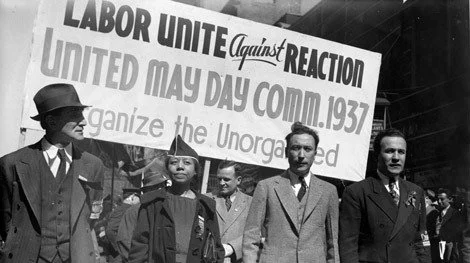
In support of working-class demands for an eight-hour workday, the Socialist International, also known as the Second International, chose May 1 as International Workers’ Day, commemorating the Haymarket Affair. Its celebration expanded worldwide in the early 20th century with the development of socialism, communism, and labor union activism. By the mid-20th century, International Workers’ Day was a recognized holiday or observance in most industrialized nations. Even the Catholic church dedicated May 1 to Saint Joseph, who is the patron saint of workers and craftsmen!
Today, the holiday is observed legally in over eighty countries, often marked by parades, speeches, and demonstrations organized by labor unions or political organizations. Surprisingly, the United States, where the Haymarket Affair took place, does not observe this holiday officially. The reason is that the president at the time, Grover Cleveland, wanted to avoid celebrating this socialist holiday and its revolutionary connotation. In the end, he chose the first Monday in September instead of May 1 as the national holiday of the American Workers. Thus, if you want to celebrate your connection with workers from all over the world, consider observing May Day and attending a rally that day!
1926 UK general strike
Labor movements are not always a bed of roses. In fact, many strikes end in failure or setbacks for the labor movement as a result of government countermeasures, be they violent or nonviolent.
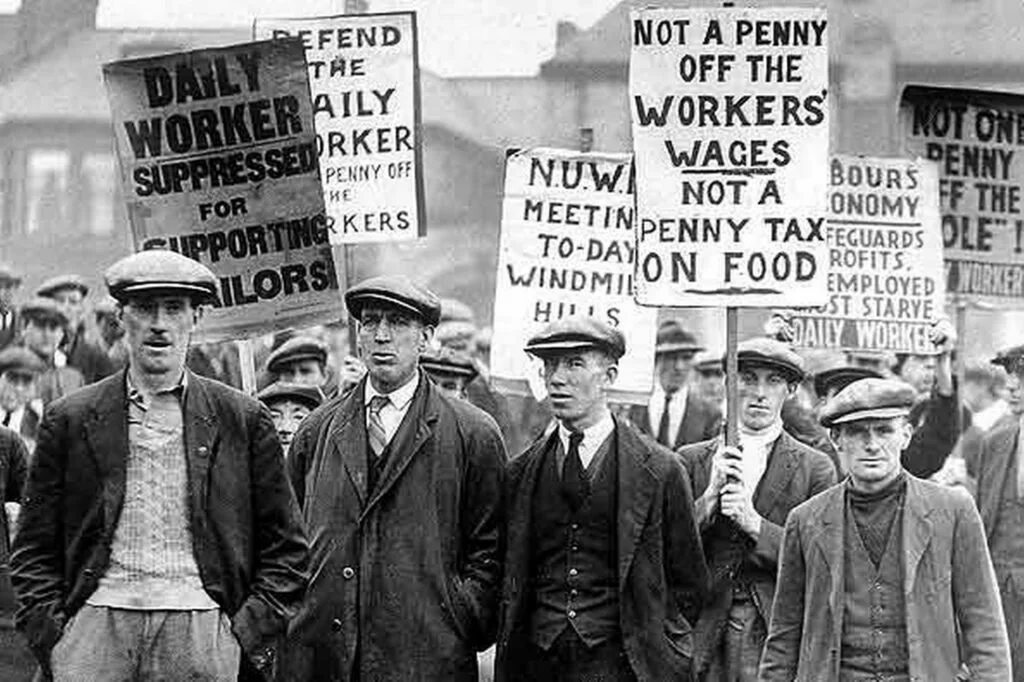
The 1926 UK general strike was a famous example of an unsuccessful strike. It was a general strike called by the General Council of the Trade Union Congress (TUC) in support of the coal miners in Britain facing a deduction of wage and prolonged workdays. After World War I, the British coal mining industry experienced a recession because of the depletion of domestic seams and the increasing availability of cheap coal exported from other countries. Furthermore, when Winston Churchill, the Chancellor of Exchequer, tried to reintroduce the gold standard in 1925, the exportation of British coal was reduced even further, since the British pound was too strong against other currencies. This “historic mistake” in monetary policy threatened the profits of mine owners, who made the decision to cut the wages of coal miners and increase their working hours in order to maintain the same level of profitability. After WWI, the miners’ weekly pay had been reduced from £6.00 to a miserly £3.90, an unsustainable figure contributing to severe poverty for a generation of workers and their families. When the mine owners announced their intentions to reduce wages further, they were met with fury by the Miners Federation.
“Not a penny off the pay, not a minute on the day.” That was the phrase when the Miners’ Federation of Great Britain rejected the terms of the mine owners. With the support from TUC, the Miners’ Federation started negotiations with the government, which ultimately failed to reach an agreement, as the government only promised a temporary subsidy to maintain their wage. The general strike began on May 3, 1926. At its peak, approximately 1.75 million workers nationwide participated in the strike, despite the TUC's limitations on participants due to fears of a nationwide revolution.
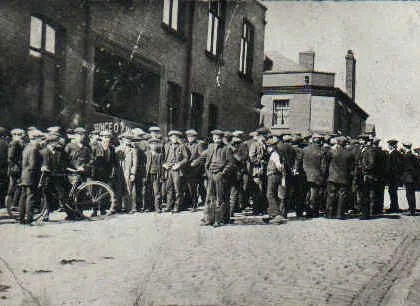
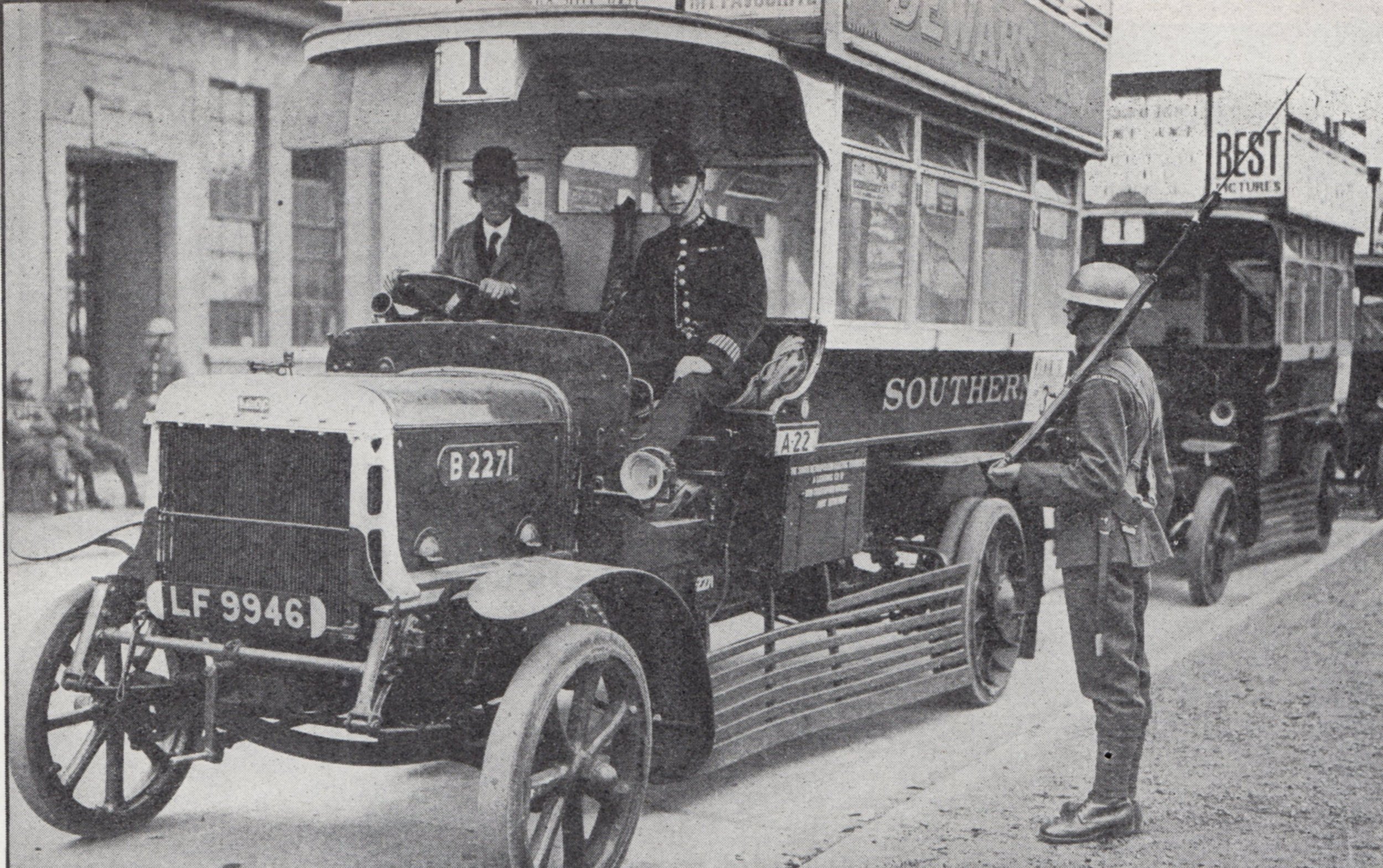
Unfortunately, the government had been preparing for the strike for over nine months, during which it had prepared by creating organizations such as the Organization for the Maintenance of Supplies. It was ready and able to do whatever it could to keep the country moving. It rallied support by emphasizing the revolutionary nature of the strikers. The armed forces and volunteer workers helped maintain basic services. The government used the Emergency Powers Act 1920 to maintain essential supplies. With the volunteers from middle-class and strikebreakers who kept the country moving, the TUC gave up the strike with no promise from the government on May 12, after nine days of general strike.
The results of this unsuccessful general strike were profound. The miners had maintained resistance for a few months before being forced by their own economic needs to return to the mines, working on lower wages and longer hours. Although the government did not retaliate directly against the TUC, it passed the Trades Disputes and Trade Unions Act in 1927, which restricted the power of trade unions to strike and picket. This act, until its repeal in 1946, severely weakened the power of labor movements as well as the Labor Party, which was the primary parliamentary opponent of the ruling Conservative Party and a general supporter of labor unions. The TUC also became cautious about general strikes and sought help from political parties. There has not been a general strike in the United Kingdom ever since.
Additional Reading: Historic UK
Congress of Industrial Organizations (CIO)
The labor movements in the USA were deeply connected to the CIO, a federation to organize workers in industrial unions. It was founded in 1935 by eight union chiefs who were not satisfied with the American Federation of Labor (AFL), the largest union grouping in the USA. The CIO preferred industrial unionism, which aims at uniting all workers in one or more manufacturing combines, over the AFL’s approach of craft unionism, which believes workers’ advantages may be secured from the skills they possess. Since more workers were working in manufacturing combines, which did not require any skills, the CIO’s strategy should be more effective. Its effectiveness was further demonstrated by its success in several strikes held by the CIO in 1934.
In 1936, with the common interest of supporting the Democrats’ presidential candidate, Franklin D. Roosevelt, many members of the Communist Party of the United States of America (CPUSA) participated in the CIO to serve as the bureaucracy’s point-man to support Roosevelt’s New Deal, especially the collective security proposal laid out in the “Quarantine the Aggressors” speech of 1937, hoping to form an antifascism “Popular Front” in the USA. For all the concessions the CIO had made in taming workers’ militancy, the Democrats did not stand on the side of union workers, especially when workers were organizing strikes against the Democrats’ business. The 1937 “Memorial Day Massacre” was a tragic example when police shot and killed ten demonstrators during the “Little Steel Strike” in Chicago. The “Little Steel Strike” was called against some small steel manufacturers who refused to sign a union contract with their workers after the US Steel had done so. Partly because of the policy change of the party, this strike did not include mass picketing, sit-downs, or elected strike committees. The strikers were restricted to routine picketing, which did not prevent management from hiring scabs. However, these peaceful protests did not prevent the Chicago police from firing at about two thousand unarmed union members, sympathizers, and their families during a union-sponsored picnic on Memorial Day 1937. The CIO called on Roosevelt to condemn the steel bosses, the city’s Democratic mayor, and the Democratic governors of Pennsylvania and Ohio. Despite the CIO’s indispensable support for his 1936 reelection, Roosevelt called down a plague on both houses and refused to rebuke his party allies for the “Memorial Day Massacre.” Without an alternative strategy for the campaign, the Little Steel Strike ended, concluding the CIO's offensive in basic industry.
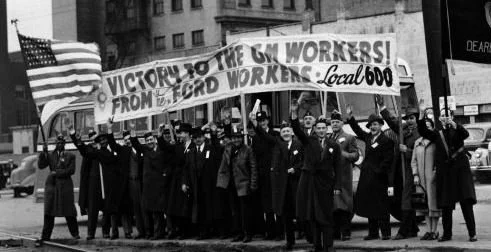
After the outbreak of World War II, the CIO did not support the war against Germany since the USSR signed a non-aggression pact, the Molotov-Ribbentrop Pact, with Nazi Germany. In 1939 and 1940, the CIO held several successful strikes for workers seeking better wages and the right to collective bargaining, especially in the automotive, steel, and aerospace industries, where product demand increased due to national security implications. The United Auto Workers (UAW), a CIO-affiliated union, had grown significantly in size during these successful strikes. However, their attitude changed drastically when the Nazis broke the pact and invaded the USSR in June of 1941. The communists and pro-Soviet workers became fervent supporters of the war and sought to end strikes that might hurt war production. The CIO supported a wartime no-strike pledge, which aimed at eliminating all strikes, including major strikes for new contracts and small strikes for particular grievances. In return, the government offered fair arbitration by the National War Labor Board to determine the wages and new terms in the contract. This procedure guaranteed a wage increase that would keep pace with inflation, although the increase was not fast enough in the later years of the war. As part of the wartime labor agreements to maintain production, the government backed the CIO with the union security provisions to ensure industrial peace—requiring employers to recognize unions and allowing unions to enroll workers automatically or collect dues through “maintenance of membership” clauses. Although unions and parties not affiliated with the CIO, such as the Socialist Party of America (SPA), still attempted to hold strikes during wartime, they were usually smaller in scale and mostly broken by the CIO and CPUSA together as fast as possible. The experience of bargaining on a national basis, while restraining local unions from striking, also tended to accelerate the trend toward bureaucracy within the larger CIO unions. However, with the demobilization of rank-and-file militancy and the end of the wave of successful union organizing in basic industry, the CIO lost the support of many radical left-wing workers, weakening its connection with the rank-and-file working class.
After WWII, the wartime alliance between the USSR and the US broke down, and the communists in the CIO once again opposed American imperialism. Anticommunists used their newfound credibility to purge Communists and other radicals from the labor movement, creating a labor movement fully loyal to American Imperialism. In 1947, the Taft-Hartley Act required all union leaders to sign affidavits affirming that they were not members of the Communist Party; those who refused were barred from holding union office. The Act also prohibited jurisdictional strikes, wildcat strikes, solidarity or political strikes, secondary boycotts, secondary and mass picketing, closed shops, and monetary donations by unions to federal political campaigns. The anti-communist movement in the CIO became even more ferocious after the CPUSA supported Henry A. Wallace’s Progressive Party campaign for president in 1948 and opposed the Marshall Plan. As the CIO became conservative and anti-communist, most of the critical differences that once separated the CIO and AFL had faded since the 1930s. The AFL had not only embraced industrial unionism but also included industrial unions, such as the International Association of Machinists (IAM), that had become as large as the UAW or the Steelworkers. In addition, the AFL had a number of advantages in those negotiations since it was twice as large as the CIO. As a result, the CIO rejoined the AFL in 1955, forming the new entity known as AFL-CIO, with the CIO becoming the Industrial Union Department of the new organization. Now, the AFL-CIO is made up of 56 national and international labor unions with 12.5 million members.
Additional readings: UW Mapping American Social Movement Projects; ASU Center for Work and Democracy
The Great Postal Strike of 1970
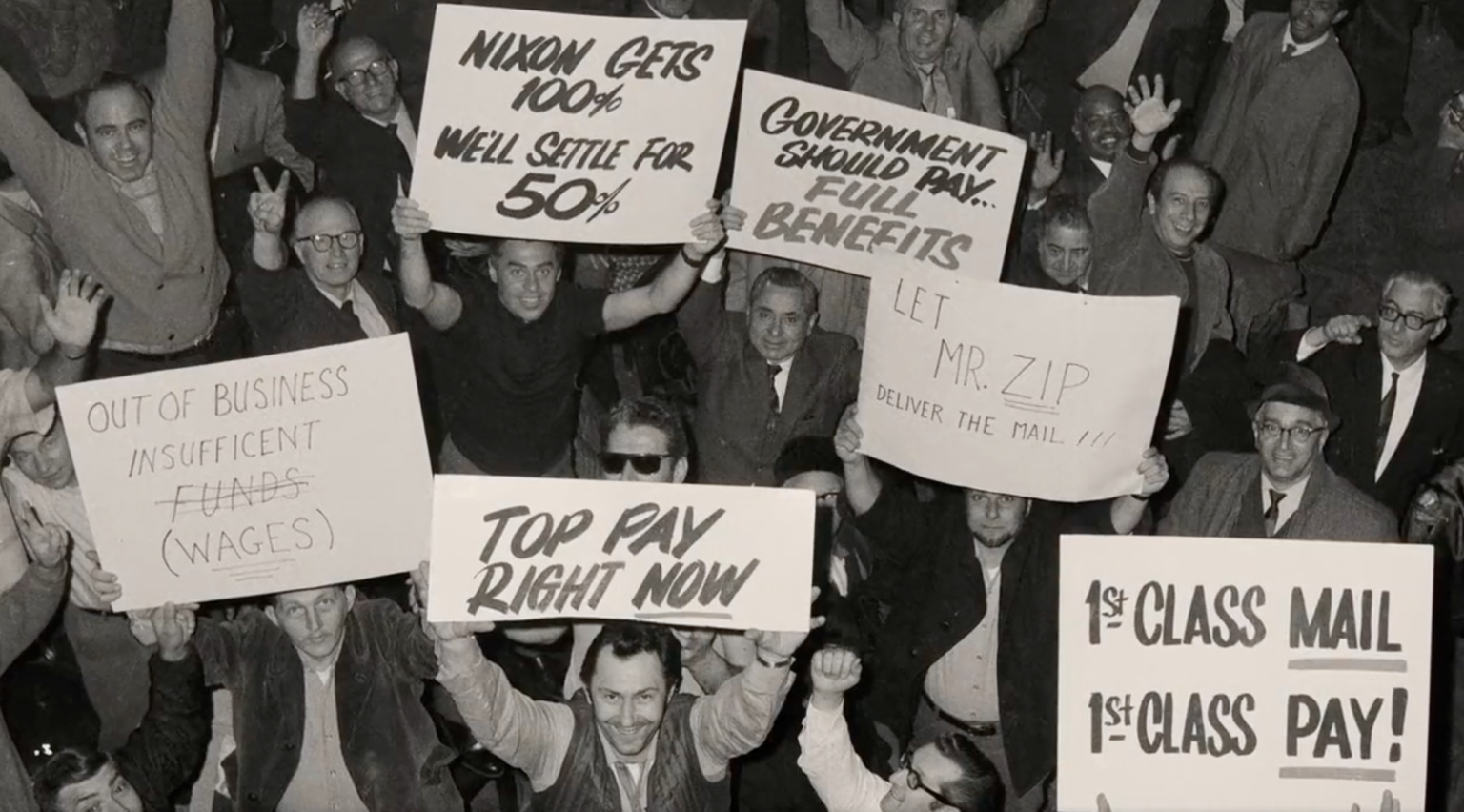
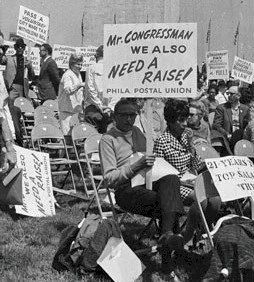
People may assume that the labor movements in the USA would gradually fade during the Cold War, since its close connection to the communist movement; however, they are wrong. The Cold War was an epoch during which the two opposing blocs with different ideologies tried their best to prove their superiority. When the USSR was generally offering its citizens a guaranteed job, free job training, and free housing near the workplace, the USA, representing the capitalist side of the world, was forced to make concessions to workers, granting them better wage and working conditions. A typical example was the Great Postal Strike in 1970, when postal workers in the United States successfully held a nationwide strike fighting for higher wages and better working conditions. In 1970 postal workers suffered from an extremely low salary that started out at $6,176 ($51,169 in 2025 dollars), increasing barely to $8,442 ($69,943 in 2025 dollars) if they had served the nation for over twenty years. Along with low base wages, postal workers were forced to work overtime without proper compensation and in harmful working environments. In March 1970, Congress finally reported a bill that would give postal workers a 5.4% pay increase after a long debate, but it was even less than the rate of inflation. The raise was only one-eighth of the skyrocketing salary that Congress had given itself just the year before.
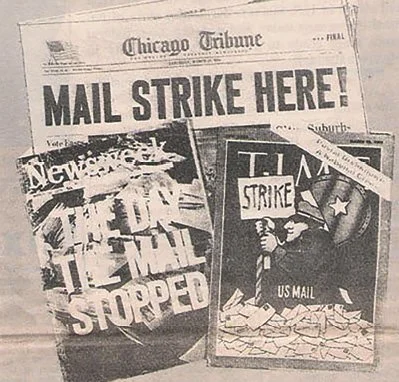
The postal workers were furious and decided to go on a strike for higher pay, better working conditions, and the right to collective bargaining. On March 17, New York City letter carriers voted to defy the law and go on strike. Clerks and other postal workers refused to cross their picket lines. Then, the wildcat strike suddenly spread across the country. By the following week, two hundred and ten thousand postal workers from more than six hundred locations across the country walked off the job.
President Nixon appeared on television and ordered the postal workers back to work, with the expectation that the pressure would force the workers to compromise. However, his address only intensified the situation, and workers in other government agencies stood up to support postal workers, announcing that they would also strike if Nixon pursued legal action against postal employees. President Nixon attempted to have the United States Armed Forces process the mail, but this turned out to prove the importance of postal workers—twenty-four thousand military personnel were sent to New York City, but they were not able to fulfill the duty effectively.
The nationwide strike lasted for eight days before the government surrendered and gave the postal workers a 6% wage increase, which was increased to 14% that summer. Postal workers also won a reorganization of the U.S. Post Office Department into the U.S. Postal Service, with the right of collective bargaining, lower-cost life insurance, and better working conditions.
The 1970 Great Postal Strike was the largest strike against the Federal Government and the first walk-out against the Federal Government in U.S. history. The civil rights movement was also an important contributor to the strike. Workers were revitalized by the civil rights movement by observing Black Americans' struggle for equality, justice, and civil rights using the practice of civil disobedience.
To quote Bill Burris, who was a young postal worker taking part in the Great Postal Strike and became the president of the American Postal Workers Union: "The most important achievement of the strike was winning the right to bargain collectively. By standing together, we had become a real union … standing ten feet tall instead of groveling in the dust."
Additional Readings: AFL-CIO Website
Women in Labor—Uprising of the Twenty Thousand, The 1980 Nurses’ Strike
Women played an important role in the labor movement of the 20th century, after the industrial revolution and capitalism had brought women into manufacturing positions. In the early 20th century, women’s jobs were generally limited to textile and garment factories, food processing, and teaching. Although the majority of workers in the shirtwaist industry in New York were women, many of them suffered from low wages, since they were considered “unskilled” even if they had mastered their job, getting paid merely one fifth of the salary of those “skilled” sample makers, who were almost exclusively male. There was a so-called International Ladies Garment Workers Union (ILGWU), but it was founded by men and was very conservative. ILGWU dismissed women from its leadership because it believed that women were more interested in marriage and motherhood than working.
In 1909, a labor strike broke out in the New York shirtwaist factories in protest of low wages, long hours, and unsuitable working conditions. It was led mostly by female activists, and 70% of its participants were women. When the strike informally started in three different firms in New York, the fledgling ILGWU hardly gave any support to the striking women, who suffered from police arrests, personal injury, and harassment. It was not until Clara Lemlich Shavelson, one of the strike leaders, delivered a powerful philippic at a local meeting of strike supporters at Cooper Union that a group of 20,000 New York garment workers walked out:
“I am a working girl, one of those who are on strike against intolerable conditions. I am tired of listening to speakers who talk in general terms. What we are here to decide is whether we shall or shall not strike. I offer a resolution that a general strike be declared—now.”
The general strike lasted eleven weeks, with harassment and arrests continuing. During the hard time, hundreds of bold young women—malnourished and poorly clad in the bitter winter cold—handed out leaflets, raised funds, distributed strike benefits, scheduled meetings, and maintained the crowd’s morale. Besides some of the outstanding organizers, such as Clara Lemlich, Pauline Newman, and Rose Schneiderman, who had been active in radical politics before the strike, hundreds of other women assumed leadership roles spontaneously, only to disappear after the strike.
Though not a complete victory, the uprising achieved significant, concrete gains. Out of the Associated Waist and Dress Manufacturers’ three hundred and fifty-nine firms, three hundred and thirty-nine signed contracts granting most demands: a fifty-two-hour week, at least four holidays with pay per year, no discrimination against union loyalists, provision of tools and materials without fee, equal division of work during slack seasons, and negotiation of wages with employees. By the end of the strike, 85% of all shirtwaist makers in New York had joined the ILGWU. The union's Local 25, which began the strike with a hundred members, now counted ten thousand. Furthermore, the uprising laid the groundwork for industrial unionism in the garment industry. Inspired by the shirtwaist makers, sixty thousand cloak makers—men, this time—launched the Great Revolt in the summer of 1910, and other garment strikes ensued across the country. After five years of unrest, the “needle trades” emerged as one of the best-organized in the United States. Less tangible, but equally important, the general strike convinced conservative veterans to accept women as capable union activists. The young women themselves discovered their own self-worth through the ideological ferment and economic struggles of 1909–1910. Many of them remembered the Uprising of the Twenty Thousand as the formative event of their adult lives.
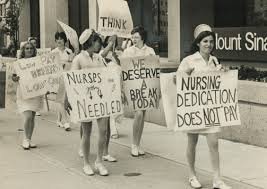
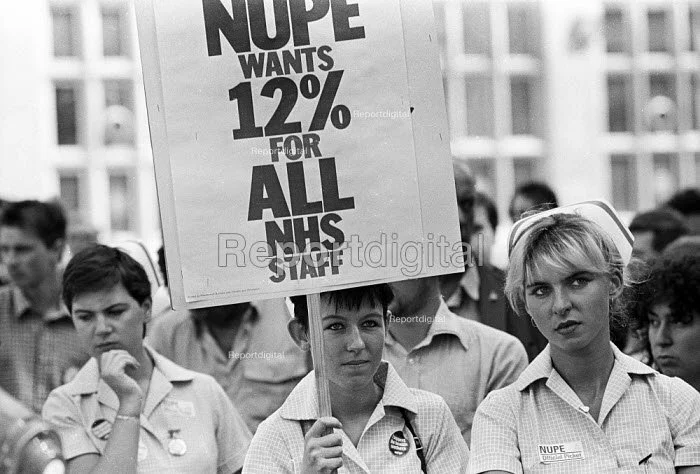
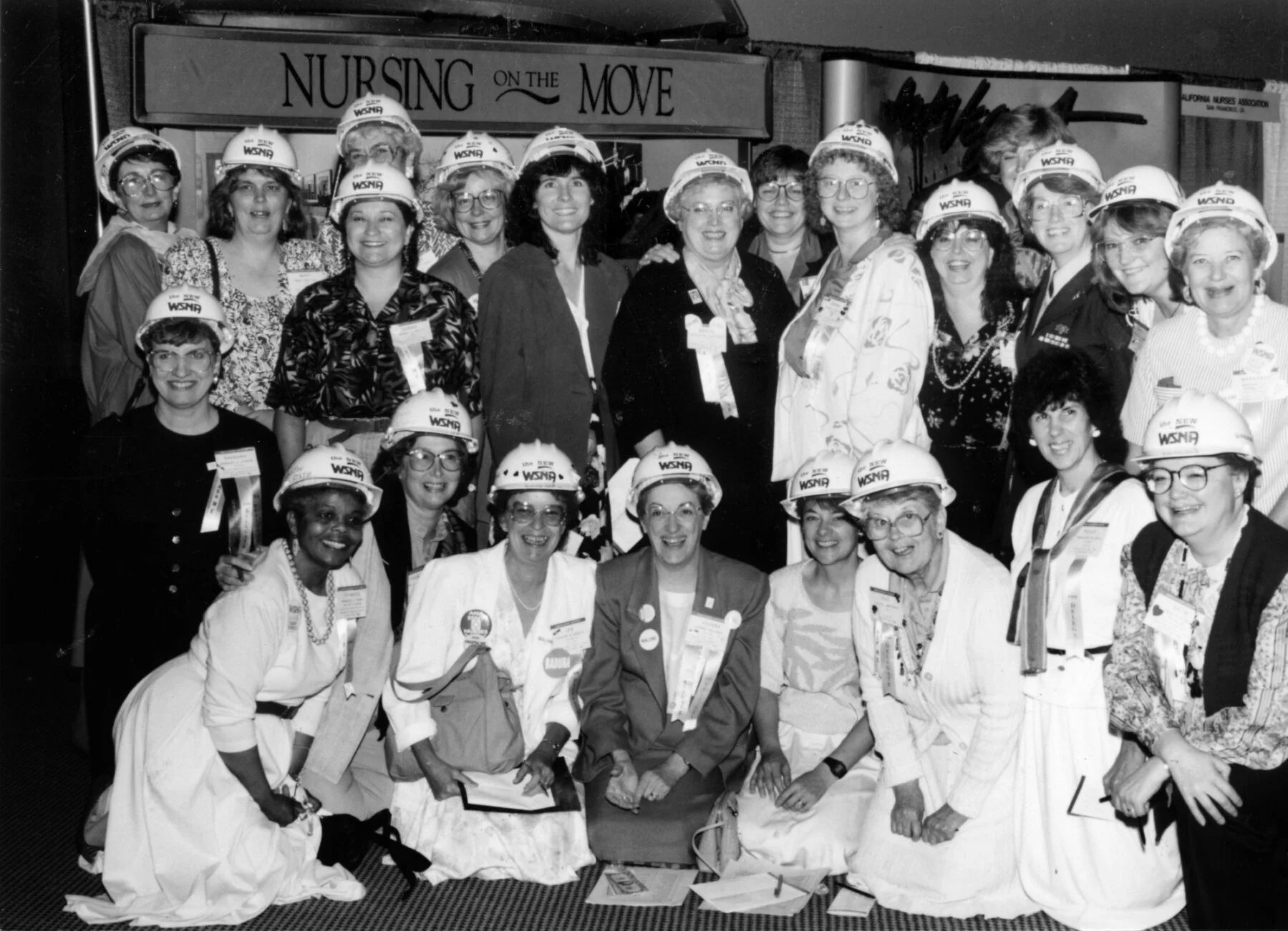
During World Wars I and II, nursing saw substantial growth, which brought many women into this field of rising importance. However, nurses suffered from mandatory overtime work all over the world. In many hospitals in New York, nurses were forced to work over seventy-five hours a week, with no supplementary backpay. However, after a few brief strikes in 1980, nurses won a new contract that would increase their wages and benefits by over 37% over three years. These strikes, as well as some other union actions in the United Kingdom in the 1980s, galvanized nurse activism, setting a precedent for later healthcare actions. The strikes legitimized direct actions by healthcare providers, who were mainly female (and are still mainly female today), and demonstrated that public support could be maintained even during the nurses' strikes, as long as the cause was just. Ever since, healthcare providers have not been afraid of conducting union actions to fight for their laborers’ rights.
The twentieth century was an era of profound change and bold experiments. The rise and fall of the USSR, along with the outbreak of two World Wars, deeply shaped global labor movements, influencing their politics, goals, and strategies. Across the world, workers organized, protested, and struck—sometimes they succeeded, sometimes they failed. But each struggle offered lessons that strengthened the next. Thanks to their efforts, more and more people today are benefiting from hard-won rights: the eight-hour workday, humane working conditions, paid leave, pensions, and other forms of social welfare. These victories remind us not only of what we can win but how we can win. As we move further into the 21st century, we must carry forward the knowledge and resolve of past movements to continue fighting for justice, for ourselves and for those still facing exploitation and inequality all over the world.